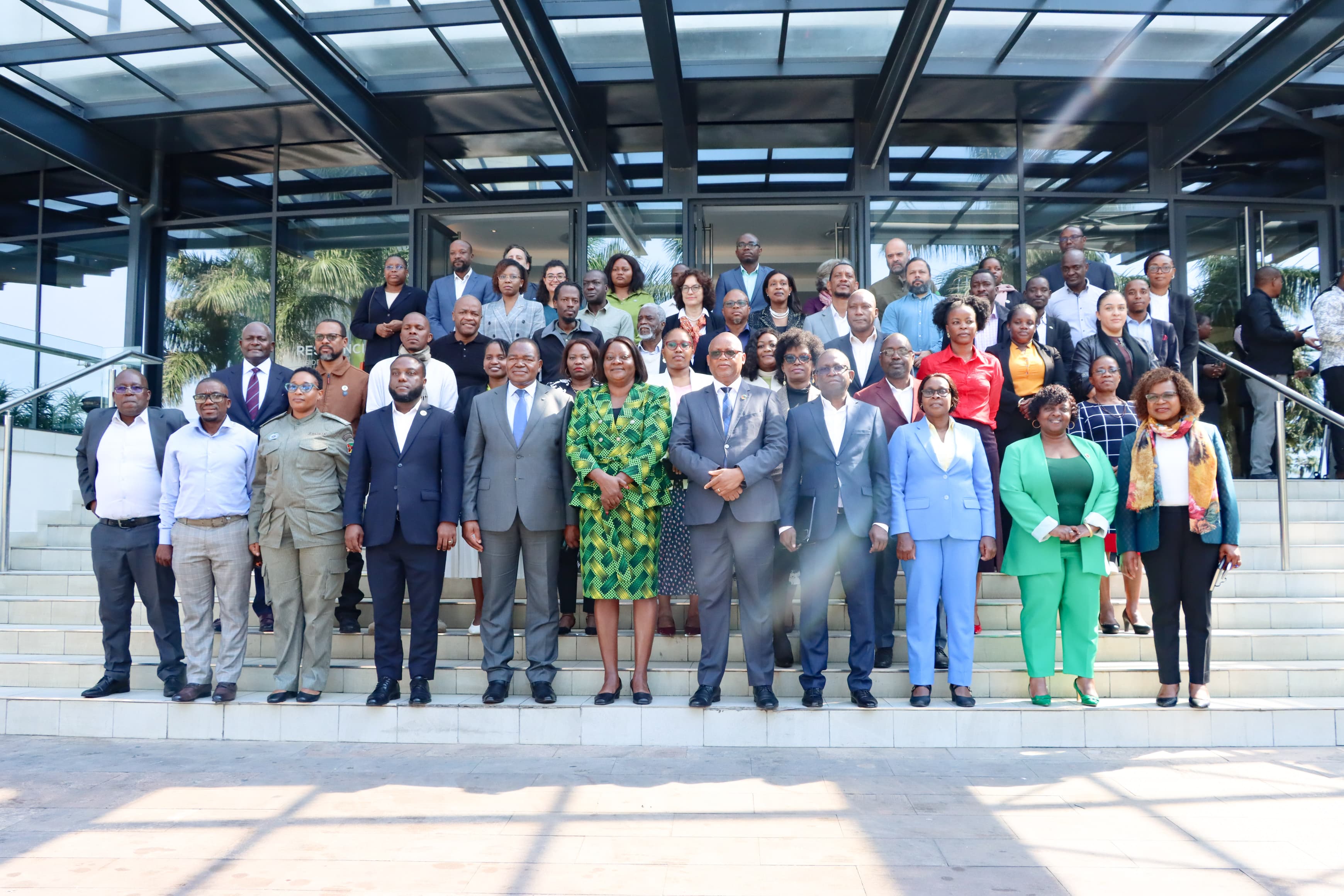
The SADC Secretariat with support from the Ministry of Agriculture, Environment and Fisheries of Mozambique hosted the National Dialogue on Raising Awareness of the SADC Transfrontier Conservation Areas (TFCA) Programme (2023–2033) and Natural Resources Management Frameworks in Maputo on 5–6 August 2026.
Facilitated by the SADC Secretariat, the Germany Cooperation and the International Union for Conservation of Nature (IUCN), the dialogue brought together government ministries, conservation agencies, river basin organisations, financing institutions and civil society from across the country to strengthen national ownership and cross-sectoral support for transboundary conservation.
The meeting sought to strengthen national ownership, enhance cross-sectoral collaboration and foster broad-based support for the implementation of transboundary conservation and sustainable natural resource management initiatives.
The workshop was officially opened by His Excellency Gustavo Dgedge, Secretary of State for Land and Environment, while the SADC Secretariat outlined the objectives of the dialogue, aimed at promoting a more coordinated, better-informed and multi-sectoral approach to implementing TFCAs at national level.
The discussions covered the full suite of regional natural resources frameworks, alongside with the SADC TFCA Programme and the implementation of the Joint Action NaturAfrica through the GIZ/Climate Resilience and Natural Resource Management (C-NRM) Project. The dialogue underscored that Transfrontier Conservation Areas extend beyond biodiversity conservation, encompassing governance, cooperation, and the equitable sharing of benefits among participating stakeholders.
The dialogue explored Mozambique's conservation landscape and roadmap to 2030, spanning biodiversity, climate and the blue economy, and heard from the National Administration for Conservation Areas (ANAC) on the status and governance of the country's terrestrial and marine TFCAs. The discussion highlighted the importance of strengthening Mozambique's blue economy and leveraging the opportunities presented by its extensive coastline. Particular attention was on existing marine transboundary initiatives and the potential for new marine TFCAs along the Mozambique Channel and the wider Western Indian Ocean. Reinforcing this vision, the meeting underlined the importance of seascapes which advances inclusive ocean governance and sustainable management in the region.
The dialogues also shared experiences on TFCA management, river basin cooperation, conservation financing, the Mozambique Channel and community-led stewardship. It concluded with the development of a draft Mozambique TFCA Implementation Roadmap and adoption of key recommendations to guide the way forward, including on advancing the blue economy and strengthen marine transboundary conservation across the region.
Other notable stakeholders and partners in attendance were; Peace Parks Foundation (PPF), Limpopo Watercourse Commission (LIMCOM), Foundation for the Conservation of Biodiversity (BIOFUND), World Wide Fund for Nature (WWF), and Wildlife Conservation Society (WCS).
The SADC Secretariat acknowledged the valuable collaboration by the Republic of Mozambique to take a significant step toward more coordinated, genuinely multi-sectoral transboundary conservation, in service of the SADC region's shared vision of a world-class network of sustainably managed transboundary landscapes and seascapes.


